Understanding Excimer Technology

Introduction to Excimer Lasers

Excimer lasers are based on well-understood physical processes in high-pressure gas discharges.
Modern systems use controlled gas mixtures, energy monitoring, and particle management to ensure stable and reliable operation.

This section focuses on compact excimer lasers used in industrial and scientific systems.
Fundamentals of Excimer Laser Technology

MLase GmbH develops compact and highly stable excimer laser sources designed for integration into advanced micromachining platforms. Our systems deliver stable deep-UV pulses that support precise and repeatable micro-structuring across a wide range of industrial materials.

MLase excimer lasers enable processes such as micro-drilling, precision surface structuring, UV marking, and selective removal of polymer coatings. High pulse stability, homogeneous beam profiles, and repetition rates up to the kilohertz range ensure reliable performance in demanding manufacturing environments.

What is an Excimer Laser?

Excimer lasers are pulsed ultraviolet gas lasers based on short-lived excited molecular states.

Excimer lasers generate ultraviolet radiation from transient molecules formed in rare-gas and halogen gas mixtures.
These molecules exist only in an electronically excited state and dissociate immediately after photon emission.

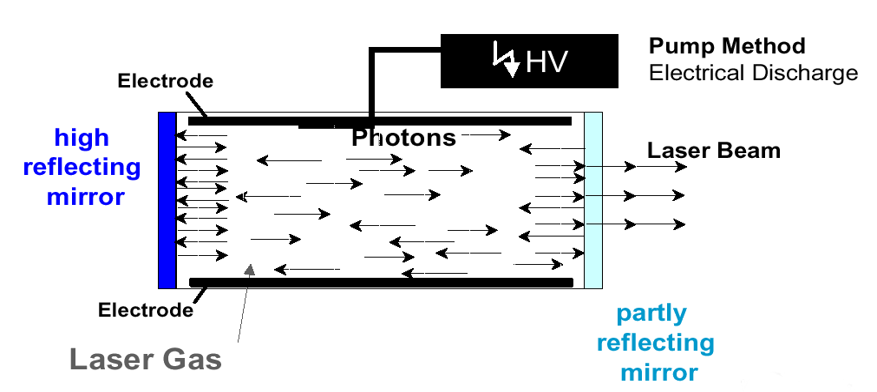
The laser medium is excited by a pulsed electrical discharge, which produces short, high-energy ultraviolet pulses typically in the nanosecond range.

Related terms:
Excimer, Premix, Stimulated Emission

Why Excimer Lasers Exist?

Excimer lasers provide ultraviolet radiation that is difficult to generate efficiently with most solid-state laser technologies.

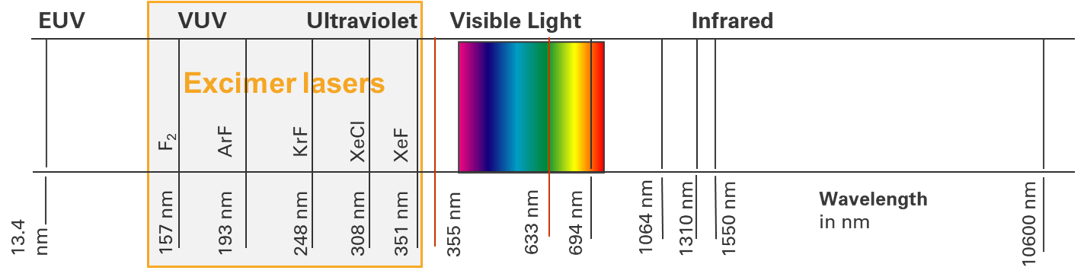
The unique molecular transitions in excimer gases produce discrete ultraviolet wavelengths such as 193 nm, 248 nm, or 308 nm.

These short wavelengths correspond to high photon energies, enabling photochemical interactions with many polymers, biological materials, and thin surface layers.

This interaction mechanism allows highly localized material modification with minimal thermal penetration.

Related terms:
Photon Energy, Absorption Coefficient, Fluence

Key Principles of Excimer Lasers

Gas Mixture


Excimer lasers use mixtures of noble gases and halogens.
The composition determines the excimer species and therefore the emitted ultraviolet wavelength.

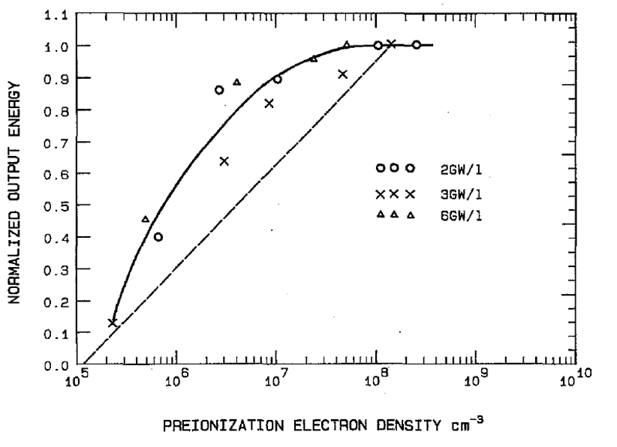
Preionization and Discharge Stability Study of Long Optical Pulse Duration UV-Preionized XeCl Lasers, R. S. Taylor, National Research Council of Canada, Division of Physics, Ottawa, Ontario, Canada KIA OR6, Received 11 March 1986/Accepted 2 May 1986

Preionization


Seed electrons are generated before the main discharge to ensure homogeneous plasma formation across the electrodes.

Electrical Discharge


A fast high-voltage pulse creates the plasma in which excimer molecules form.

Excimer Formation


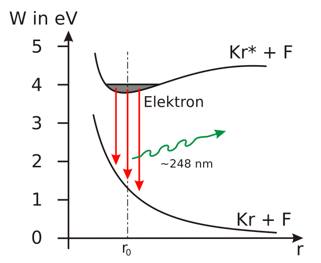
Excited noble-gas atoms form short-lived molecular complexes with halogen atoms.
These excimer molecules emit ultraviolet radiation during dissociation.

Population Inversion


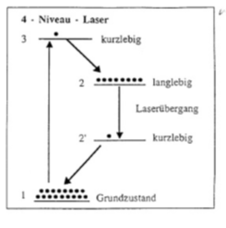
The transient excimer states create a temporary population inversion in the discharge region.

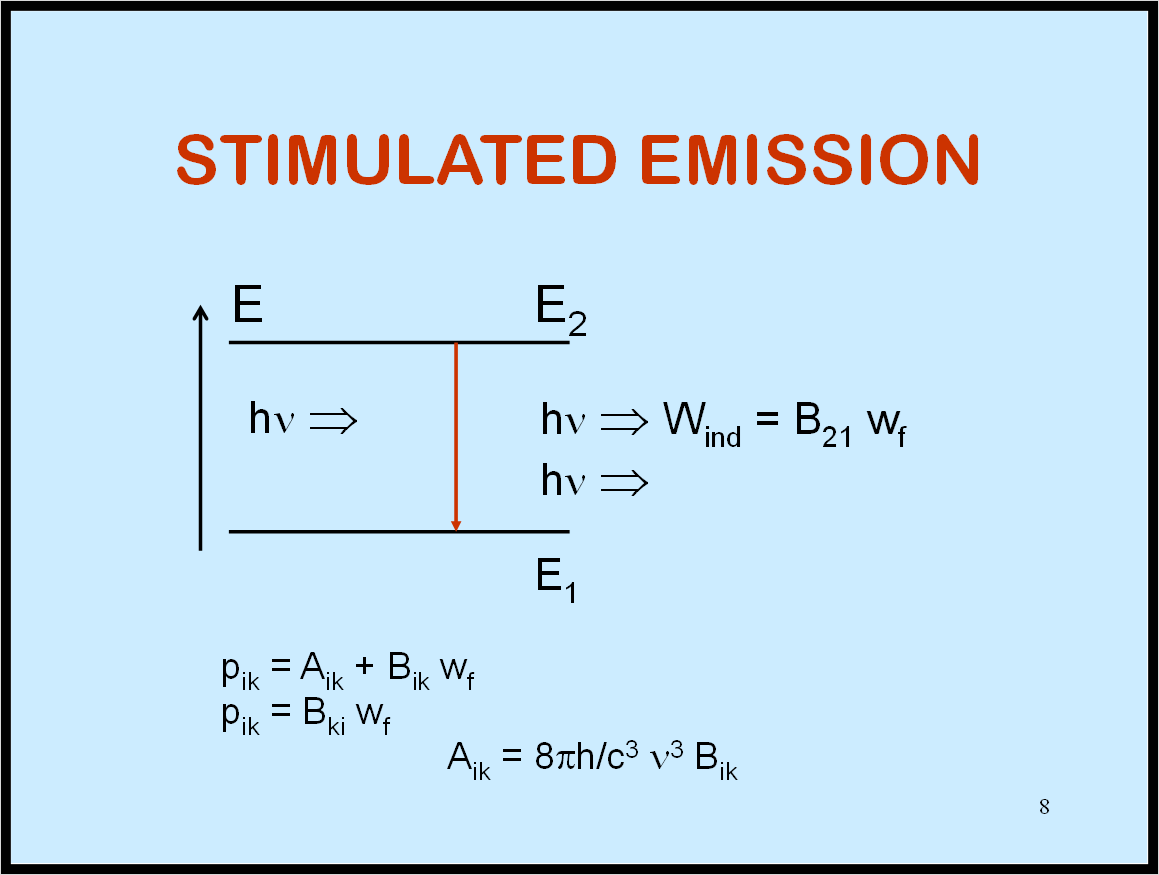
Stimulated Emission


Photons generated in the plasma trigger stimulated emission and optical amplification.

Amplification


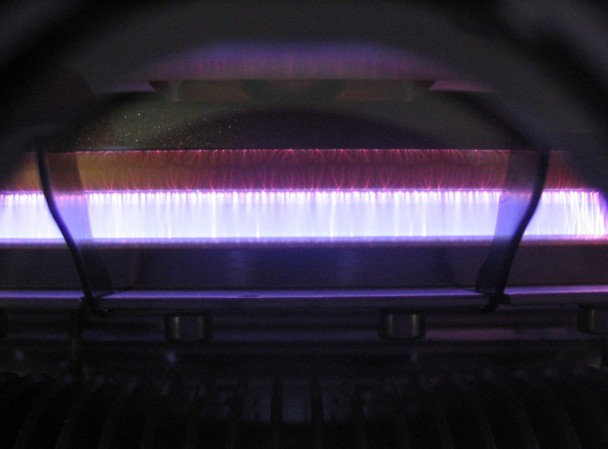
Two mirrors form the optical resonator and amplify the emitted ultraviolet radiation. The rectangular discharge region between parallel electrodes naturally defines the excimer’s rectangular beam profiles with relatively homogeneous energy distribution.

UV Pulse Emission


The amplified radiation exits the resonator as a short ultraviolet laser pulse with nanosecond duration.

Excimer Laser Wavelengths

Excimer lasers emit discrete ultraviolet wavelengths determined by the gas mixture used in the discharge. Ultraviolet laser light interacts with materials primarily through photon absorption and bond breaking.

Different rare-gas and halogen combinations produce characteristic emission lines.

Common wavelengths include:

  • 193 nm (ArF)
  • 248 nm (KrF)
  • 308 nm (XeCl)

Each wavelength interacts differently with materials depending on optical absorption and photon energy.

Related terms:
Excimer, Premix, Stimulated Emission

Interaction with Materials

Ultraviolet radiation from excimer lasers is strongly absorbed by many materials.

The high photon energy of ultraviolet radiation enables photochemical processes that differ from purely thermal laser interactions.

Material removal or modification often occurs through bond breaking in the surface layer rather than bulk heating.

Typical applications and material examples are discussed in the Applications section.

Related terms:
Photon Energy, Fluence

Characteristics of Compact Excimer Lasers

Compact excimer lasers combine ultraviolet wavelength, nanosecond pulses, and predictable beam geometry.

Typical characteristics include:

  • pulse durations in the nanosecond range
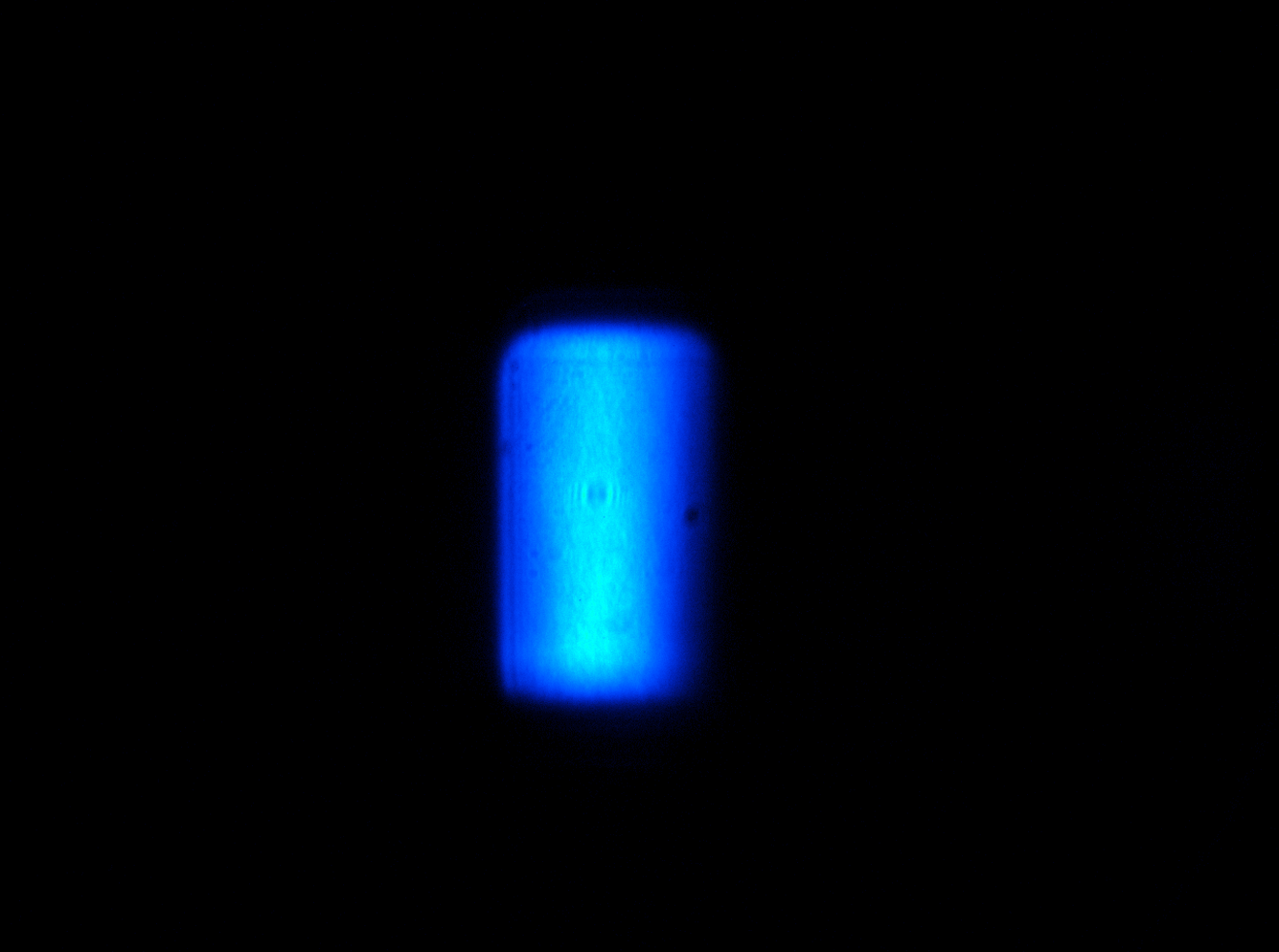
  • rectangular beam geometries
  • high pulse energy relative to beam area
  • stable pulse output through energy monitoring system

These properties make compact excimer lasers suitable for controlled ultraviolet processing in research and industrial environments.

Related terms:
Pulse Energy, Beam Profile, Stabilized Energy

Laser-Material Interaction

Ultraviolet laser light interacts with materials primarily through photon absorption and bond breaking.

Excimer lasers operate at ultraviolet wavelengths where photon energies are sufficiently high to break molecular bonds directly.

Combined with nanosecond pulse durations and controlled fluence, this interaction mechanism enables photochemical material removal with minimal thermal load and sharply defined surface structures.

Related terms:
Photon Energy, Fluence, Pulse Duration

Frequently Asked

Excimer lasers generate ultraviolet radiation directly from a gas discharge rather than from solid laser media. The combination of short wavelength, nanosecond pulse duration, and relatively high pulse energy enables photochemical material interaction that differs from many infrared or visible laser systems.

Ultraviolet emission results from electronic transitions in short-lived excimer molecules formed in the gas discharge. These molecular transitions naturally produce discrete UV wavelengths such as 193 nm, 248 nm, or 308 nm depending on the gas mixture used.

Excimer lasers are excited by fast electrical discharge pulses. The excited molecular states responsible for laser emission exist only for a few nanoseconds, which naturally limits the duration of the emitted laser pulse.

The wavelength is determined by the molecular transition of the excimer species formed in the gas mixture. Different combinations of rare gases and halogen donors produce characteristic ultraviolet emission lines.

Ultraviolet photons carry relatively high energy and are strongly absorbed by many materials. This enables precise surface modification or ablation with minimal heat diffusion into surrounding material, which is particularly useful for polymers, thin films, and sensitive structures.

Modern compact excimer lasers are designed for stable operation using controlled gas mixtures, monitored pulse energy, and automated system management. When operated within specified parameters they provide predictable and reproducible ultraviolet pulse generation

Excimer lasers operate at ultraviolet wavelengths where photon energies can directly break molecular bonds.
Material removal therefore occurs mainly through photochemical processes rather than heat diffusion, resulting in minimal heat-affected zones and sharply defined surface features.

Excimer lasers generate light in elongated discharge regions between parallel electrodes.
The geometry of this plasma region defines the resonator aperture, which naturally leads to rectangular beam profiles with relatively uniform energy distribution.

Photon energy increases as wavelength decreases.
Ultraviolet photons from excimer lasers therefore carry sufficient energy to break molecular bonds in many materials, enabling photochemical surface modification and precise micro-structuring.

Nanosecond pulses provide sufficient energy to initiate material interaction while limiting heat diffusion into surrounding material.
Combined with ultraviolet wavelengths, this pulse regime enables controlled energy deposition and precise surface modification.

Ultraviolet photons carry higher energy than visible or infrared photons.
When absorbed by many materials they can directly break molecular bonds, enabling photochemical material removal with reduced heat diffusion into the surrounding material.

Excimer lasers combine ultraviolet photon energy with controlled nanosecond pulse fluence.
This interaction regime enables photochemical material removal with limited heat diffusion, which often results in sharp edge definition and well-controlled micro-structures.

One More Question?

Let us know, if you need some help and didn’t find an answer to your question.

Need more Information?

Learn about our technology, company, products, and OEM Partnership Model

Contact Us

Ready to talk about your application needs? Get in contact with our sales team or one of our trained authorized partners.