
Excimer Laser Technology

System Integration Considerations

Excimer lasers interact with their surrounding system through electrical, optical, thermal and gas interfaces. Stable operation requires that these interfaces meet defined engineering constraints.

The specifications and integration parameters described in this section refer to standard MLI compact excimer laser systems.
Practical Aspects of Excimer Laser Integration

Integrating an excimer laser into a system requires more than electrical connection and beam delivery. Process stability and performance depend on how well supporting systems such as gas handling, cooling, and optics are aligned with the laser’s operating conditions.

This section provides a structured overview of the most relevant integration parameters and checks. It connects system requirements with real-world operation, helping to ensure reliable performance from initial setup through continuous use.

Frequently Asked Questions

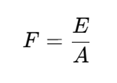
Material processing with excimer lasers depends on fluence (energy per area) delivered to the surface.

Fluence equation

Fluence equation

Where:

  • F = fluence (J/cm²)
  • E = pulse energy (J)
  • A = illuminated area (cm²)

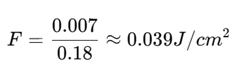
Example (MLI lasers)

Typical beam dimensions:
6 mm × 3 mm

Beam area:
A = 0.6 × 0.3 = 0.18 cm²

Pulse energy:
7 mJ = 0.007 J

Result:

Fluence result

Excimer material processing typically occurs between:

0.05 – 2 J/cm²
depending on wavelength and material.

Excimer processing often uses mask projection optics.

The projected feature size depends on the optical demagnification ratio.

Projection equation

image

Where

M = projection magnification

Typical projection ratios: 0.1 – 0.5

Example

Mask opening: 1 mm

Projection ratio: 0.2

Feature size: 200 µm

Beam divergence determines beam expansion along the optical path.

Beam expansion

Where

D₀ = initial beam size
θ = divergence angle
z = propagation distance

MLI beam parameters

Parameter Value
Beam size 6 × 3 mm
Beam divergence 2 × 1 mrad (FWHM)

Example

Distance: 500 mm

Vertical divergence: 2 mrad

Beam expansion: 0.002×500mm=1mm

This must be considered when placing:

  • beam homogenizers
  • masks
  • projection optics.

Deep UV radiation is strongly absorbed by oxygen and contaminants.

For 193 nm, beam paths should be nitrogen purged.

Purge gas requirement

Parameter Specification
Gas Nitrogen
Purity ≥ 5.5

Purpose

  • prevent ozone formation
  • reduce optical contamination
  • maintain transmission stability.

For 248 nm, purging the beam paths is not considered mandatory.

Parameter Standard configuration High power configuration
Supply voltage 230 V 230 V
Frequency 50/60 Hz 50/60 Hz
Power consumption ≤ 2 kVA ≤ 2.3 kVA
Connector IEC 60320 C14 IEC 60320 C14

Stable grounding and low electrical noise improve discharge stability.

Air cooling

Parameter Value
Airflow 400 m³/h
Exhaust hose diameter 158 mm

Duty cycle limits (air cooled)

Max. Repetition Rate Duty cycle
200 Hz 100 %
500 Hz 40 % (max 10 min)
1000 Hz 20 % (max 5 min)

Water cooling

Water cooling enables continuous 100% duty cycle operation.

Parameter Requirement
Flow rate ≥ 2 l/min
Cooling capacity ≥ 1000 W
Temperature stability ±2 °C
Supply temperature 30 – 40 °C
Pressure < 5 bar

Laser tube parameters

Parameter Value
Tube volume 6.5 l (standard)
Tube volume HP 6.3 l
Operating pressure 5 – 6 bar @20°C

Gas inlet pressures

Gas Pressure
Premix 7 – 9 bar absolute
Flush gas 1.5 – 3 bar absolute

Connectors

  • 6 mm compression fittings
  • Gas systems must be:
  • intrinsically safe
  • pressure limited to 9 bar absolute

Excimer lasers require precisely defined gas mixtures to ensure stable discharge behavior and consistent output performance. Gas quality and purity have a direct impact on lifetime and stability. For optimal results, MLase provides recommendations on qualified gas sources.

ArF mixture (193 nm)

Component Fraction Purity
F₂ 0.133 % 2.8
Ar 1.80 % 5.5
Ne balance 4.8

KrF mixture (248 nm)

Component Fraction Purity
F₂ 0.150 % 2.8
Kr 1.25 % 5.5
He 2.534 % 6.0
Ne balance 4.8

Service gases

Application Gas Purity
Optics exchange Helium 5.0
Beam path purge Nitrogen 5.5

Optics lifetime

Laser Energy Typical Lifetime
ArF 4–6 mJ 500 – 1000 million pulses
ArF HP 8 mJ 300 – 600 million pulses
KrF 7 mJ 500 – 1500 million pulses
KrF HP 12 mJ 300 – 700 million pulses
     

Active gas lifetime

Laser Energy Typical Lifetime
ArF 4 mJ 50 – 80 million pulses
ArF 6 mJ 30 – 50 million pulses
ArF HP 8 mJ 20 – 40 million pulses
KrF 7 mJ 60 – 90 million pulses
KrF HP 12 mJ 30 – 50 million pulses
     

Additional component lifetimes

Component Typical Lifetime
Laser tube 2 – 4 billion pulses
High voltage circuitry 4 – 8 billion pulses
Electronics 4 – 10 billion pulses
Gas filter ~200 gas exchanges

Passive gas lifetime

Condition Typical Lifetime
Idle gas stability 1–3 months

MLase excimer lasers are designed for modular service and low field service requirements. A defined consumables concept and exchange tube architecture allow replacement of lifetime-limited components, avoiding full system replacement and reducing operational downtime.

Operating effort in excimer systems primarily scales with total pulse count. Over time, generated pulses directly determine gas consumption, optics degradation and component replacement intervals.

One More Question?

Let us know, if you need some help and didn’t find an answer to your question.

Need more Information?

Learn about our technology, application areas, products, and OEM partnership podel

Contact Us

Ready to talk about your application needs? Get in contact with our sales team or one of our trained authorized partners.